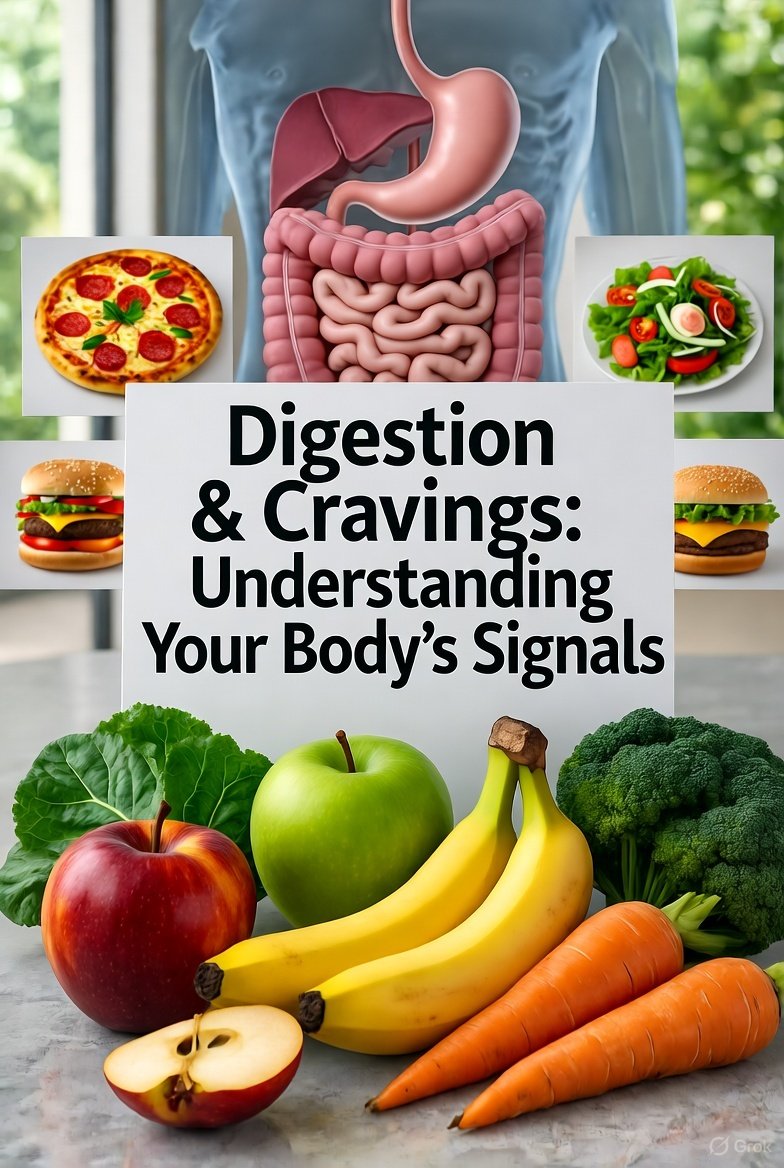
Ever feel like your stomach is running its own mood swings? One minute you’re full, the next minute you’re craving sugar, chocolate, or chips like your body won’t survive without it?
Cravings aren’t random—they’re your body communicating, often through digestion, hormones, or nutrient needs. Understanding them can help you eat smarter, feel energized, and reduce guilt.
🧠 Why Digestion Matters
Digestion isn’t just about breaking down food. It’s how your body:
- Absorbs nutrients
- Fuels energy
- Regulates hormones and mood
- Supports immune health
When digestion is off, your body sends signals: hunger pangs, cravings, bloating, or even mood swings.
Poor digestion often comes from:
- Eating too fast
- Low fiber intake
- Stress
- Food sensitivities
- Imbalanced gut bacteria
If your gut isn’t happy, your cravings spike as your body looks for quick energy or missing nutrients.
🔥 What Drives Cravings
Cravings are often a combination of hormones, blood sugar, and brain chemistry.
1. Blood Sugar Imbalance
When blood sugar dips, your body seeks quick energy—usually in the form of sugar or carbs. That chocolate bar isn’t weakness—it’s biology.
2. Hormonal Fluctuations
Hormones like ghrelin (hunger hormone), leptin (satiety hormone), and even sex hormones influence cravings. PMS or stress can increase the desire for salty or sweet foods.
3. Gut Microbiome
Certain gut bacteria actually crave foods they thrive on. Too much sugar-loving bacteria = more sugar cravings.
4. Dehydration
Sometimes your body confuses thirst for hunger, especially for sweet or salty foods.
✨ How to Support Digestion & Reduce Cravings
1. Eat Mindfully
Slow down. Chew food thoroughly. Savor flavors. Mindful eating improves nutrient absorption and reduces overeating.
2. Prioritize Protein & Fiber
- Protein stabilizes blood sugar and reduces cravings
- Fiber feeds gut bacteria, supports digestion, and keeps you full longer
Examples: eggs, chicken, fish, beans, lentils, veggies, whole grains
3. Hydrate Consistently
Drink water throughout the day. Add herbal teas for variety and gut support.
4. Include Healthy Fats
Avocado, olive oil, nuts, and seeds slow digestion, keep you satiated, and reduce sugar cravings.
5. Manage Stress
Cortisol spikes can trigger cravings for sugar and carbs. Meditation, deep breathing, or short walks can help.
6. Balance Your Gut
Probiotics (yogurt, kefir, fermented foods) and prebiotics (fiber-rich foods) feed good bacteria, supporting digestion and reducing junk food cravings.
🧠 Cravings Are Not Weakness
Understanding your cravings changes the story:
- They are signals, not failures
- They indicate what your body may be missing
- They guide adjustments to diet, hydration, or stress management
Instead of shame, practice curiosity:
- Ask why you’re craving
- Check your hydration, protein, fiber, and stress levels
- Respond thoughtfully, not impulsively
🌿 Sample Day for Digestion & Craving Support
Morning: Oatmeal with berries, chia seeds, and Greek yogurt
Snack: Handful of almonds and an apple
Lunch: Grilled salmon with quinoa and roasted veggies
Snack: Veggies with hummus or a boiled egg
Dinner: Stir-fried chicken with brown rice and greens
Throughout the day: Water, herbal tea, and mindful breaks
Even small, consistent tweaks can stabilize digestion, reduce cravings, and improve energy.
💖 Bottom Line
Digestion and cravings are your body’s communication system. When you listen carefully and respond wisely:
- Hunger and fullness cues improve
- Sugar and junk food cravings decrease
- Energy, mood, and gut health all benefit
Stop blaming yourself for cravings—they’re just signals. Learn to read them, nourish your body, and watch your energy, digestion, and confidence soar. 🌿✨
