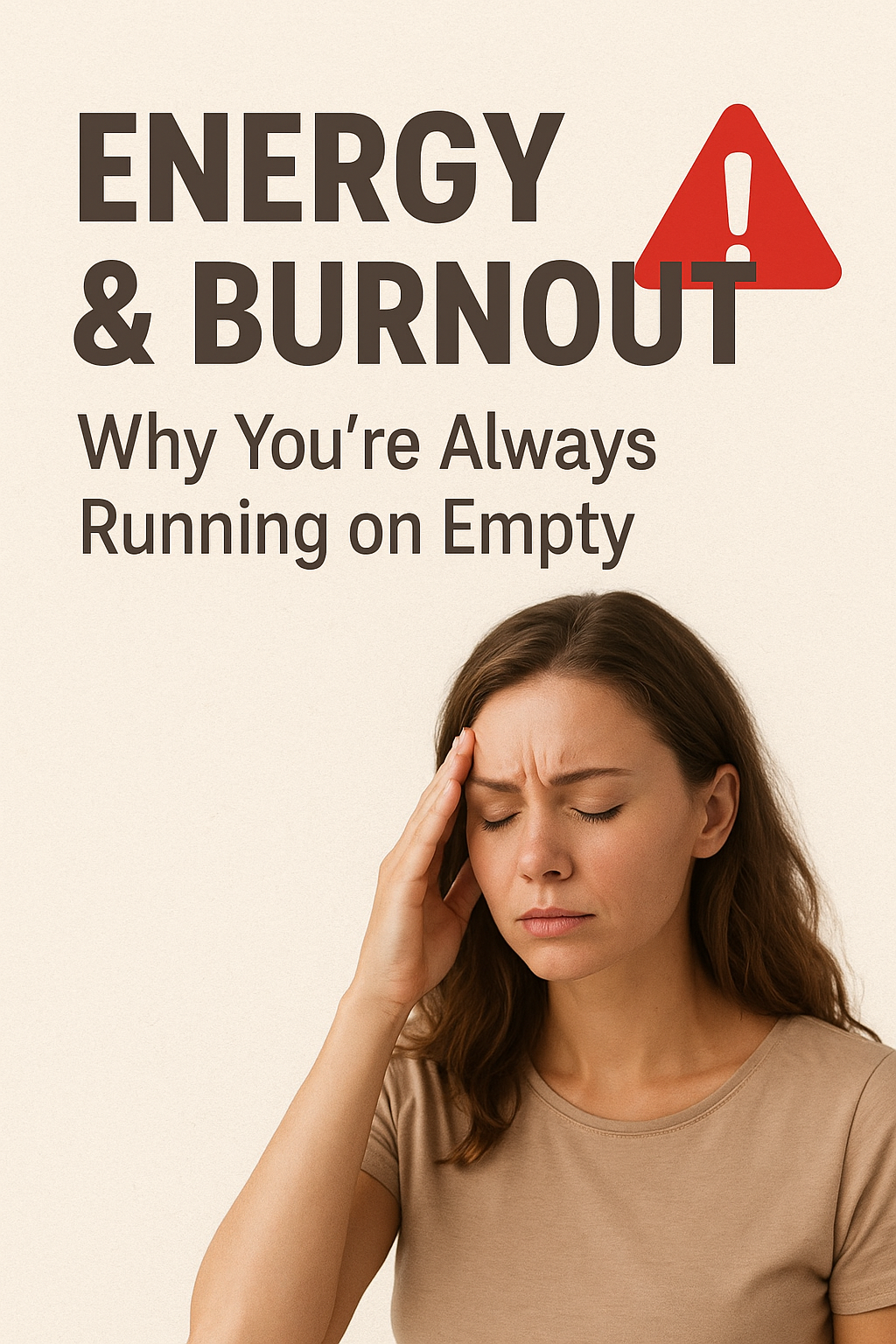
Ever feel like no matter how much sleep you get, how much coffee you drink, or how many vitamins you take, your energy just disappears by noon? You’re not lazy, weak, or failing—it’s your body waving the red flag: burnout is real.
Energy isn’t just about caffeine or sleep. It’s about how your body, mind, and lifestyle work together—or sometimes, don’t. Understanding this is the first step to taking back control.
🧠 What Causes Burnout?
Burnout happens when your energy output consistently exceeds your energy input. Basically, your body and brain are running on overdrive without the fuel or recovery they need.
Common causes:
- Chronic stress – Your body produces cortisol and adrenaline to “fight or flee,” and constant activation drains energy.
- Poor sleep – Even one bad night affects your mood, focus, and stamina.
- Overwork – Long hours, skipping breaks, or juggling too many responsibilities.
- Poor nutrition – Low protein, high sugar, and processed foods spike blood sugar and crash energy.
- Mental load – Worry, anxiety, or constant decision-making eats mental and physical energy.
Burnout doesn’t happen overnight. It’s a slow energy drain, until one day you wake up and feel… exhausted for no obvious reason.
🔥 Signs You Might Be Burnt Out
Your body gives off subtle—and not-so-subtle—signals. Watch for:
- Chronic fatigue – Feeling tired even after a full night of sleep.
- Brain fog – Forgetfulness, poor focus, and mental sluggishness.
- Mood swings – Irritability, anxiety, or sadness without clear triggers.
- Loss of motivation – Things you normally enjoy feel like chores.
- Physical symptoms – Headaches, stomach issues, or tense muscles.
- Energy spikes and crashes – Feeling wired one moment, then drained the next.
If these resonate, it’s not weakness—it’s your body telling you it’s overworked.
⚡ How to Restore Energy
The solution isn’t just more coffee—it’s a system-wide reset. Here’s how to get started:
1. Prioritize Sleep
Sleep is your body’s natural recharge. Aim for 7–9 hours per night, keep a consistent schedule, and create a dark, cool sleeping environment. No excuses—your energy depends on it.
2. Eat for Sustained Energy
Instead of quick fixes like sugar or caffeine, fuel your body with:
- Protein – Keeps blood sugar stable and builds muscle.
- Complex carbs – Oats, brown rice, and sweet potatoes for slow-burning energy.
- Healthy fats – Nuts, avocado, and olive oil for satiety and brain support.
- Hydration – Dehydration = fatigue. Water is essential.
3. Move Your Body Strategically
Exercise isn’t just about burning calories. Moderate activity:
- Boosts endorphins
- Improves circulation
- Enhances energy levels
Even a 10–15 minute walk can help reset your system when you feel drained.
4. Manage Stress Effectively
Chronic stress is a major energy vampire. Techniques that help:
- Meditation or deep breathing
- Journaling
- Short breaks from work or social media
- Nature walks
5. Set Boundaries
Overcommitting kills energy. Learn to say no to:
- Extra tasks that aren’t urgent
- People or environments that drain you
- Mental load you don’t need to carry
6. Take Micro-Recoveries
Small, intentional breaks throughout the day can do wonders:
- Stretching
- Quick walk
- 5-minute breathing exercises
- Power nap (10–20 minutes max)
These mini-resets prevent energy crashes later in the day.
🧠 Mental & Emotional Energy
Burnout isn’t just physical—it’s also mental. Protect your mental energy by:
- Delegating tasks
- Reducing decision fatigue (simplify routines)
- Practicing mindfulness
- Limiting social media and news intake
Energy isn’t just about movement—it’s about what your brain consumes daily.
💡 Small Habits for Long-Term Energy
- Start your day with a glass of water before coffee.
- Include protein in every meal.
- Take 5-minute breaks every hour if working at a desk.
- Go outside for sunlight and fresh air.
- Avoid late-night screens to improve sleep quality.
- Track your energy throughout the day to identify patterns.
Consistency beats intensity—small, repeated habits create sustainable energy over time.
💖 Bottom Line
Energy is a resource—like money in a bank. If you spend more than you deposit, you go into deficit, and that’s burnout.
You don’t have to live exhausted or rely on coffee for survival. Focus on sleep, nutrition, movement, stress management, and mental recovery. These aren’t just “nice-to-have” — they’re essentials for sustainable energy.
Remember: feeling drained doesn’t mean you’re weak. It means your body is telling you to pause, recharge, and care for yourself. ⚡💖
